
Machete, Parang (PDRM)
General Information
Name: Machete, Parang (PDRM) 1.
Country of Origin: Malaysia.
Date of Production: Unknown, likely early 1980s.
Manufacturer: KH.
Camouflage Pattern: Tropical Disruptive Pattern Material.
Number Of compartments: 2.
Weight: 671g.
History
With New Zealand soldiers regularly stationed at Dieppe Barracks, Singapore, from the late 1970s through to the early 1990s on rotational deployments, it became common for personnel to encounter and adopt locally available military field equipment from Singapore and Malaysia where it proved practical in service.
This parang is one such example. Rather than relying solely on issued equipment, soldiers often selected regional tools that were better suited to dense jungle environments and daily bush work. In many cases, these locally sourced blades were preferred over the standard-issue golok machete — which itself was originally based on the traditional parang design.
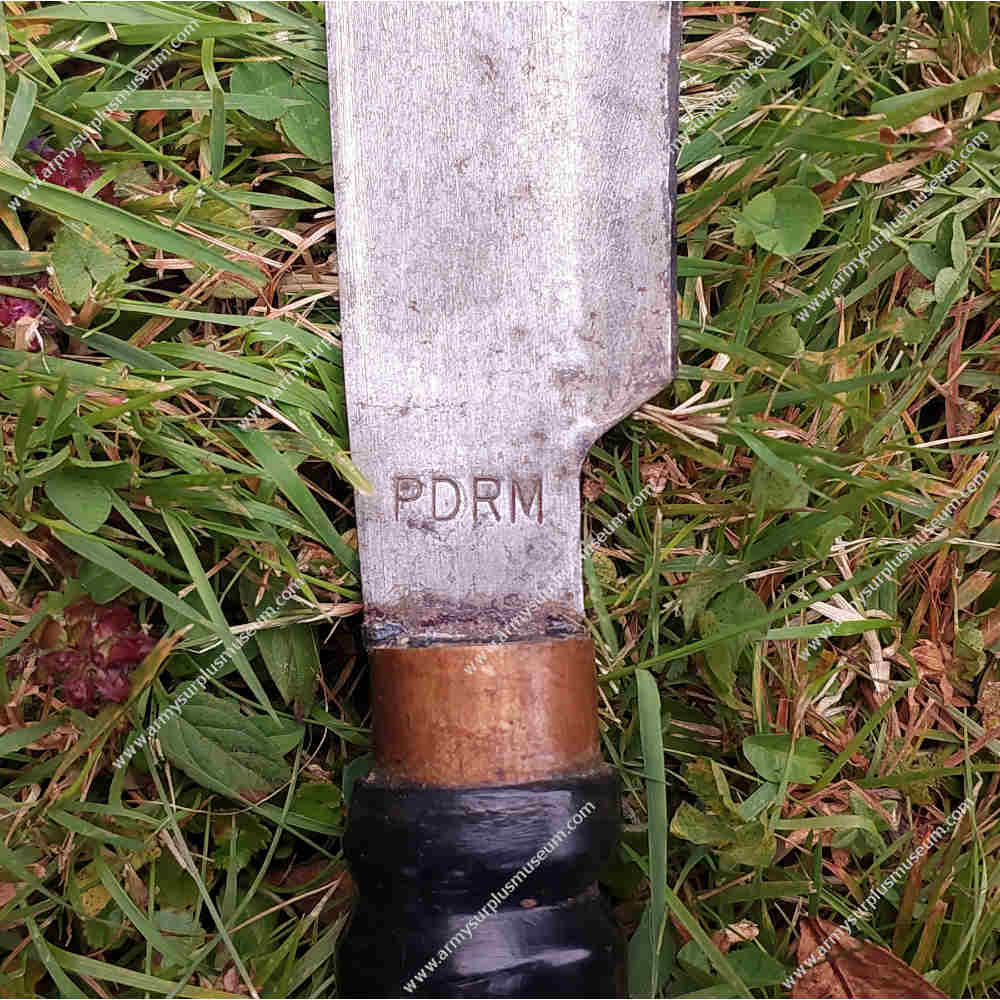
This particular example was initially issued to the Royal Malaysian Police and is stamped PDRM – Polis Diraja Malaysia, confirming official service use. Its presence alongside New Zealand equipment reflects the informal but widespread practice of operational kit adaptation, where proven local tools were incorporated into individual field equipment based on performance rather than regulation.
The use of New Zealand DPM fabric on associated equipment places this example within a late 1980s to early 1990s time frame, aligning with the latter phase of New Zealand’s operational presence in Singapore.
Description
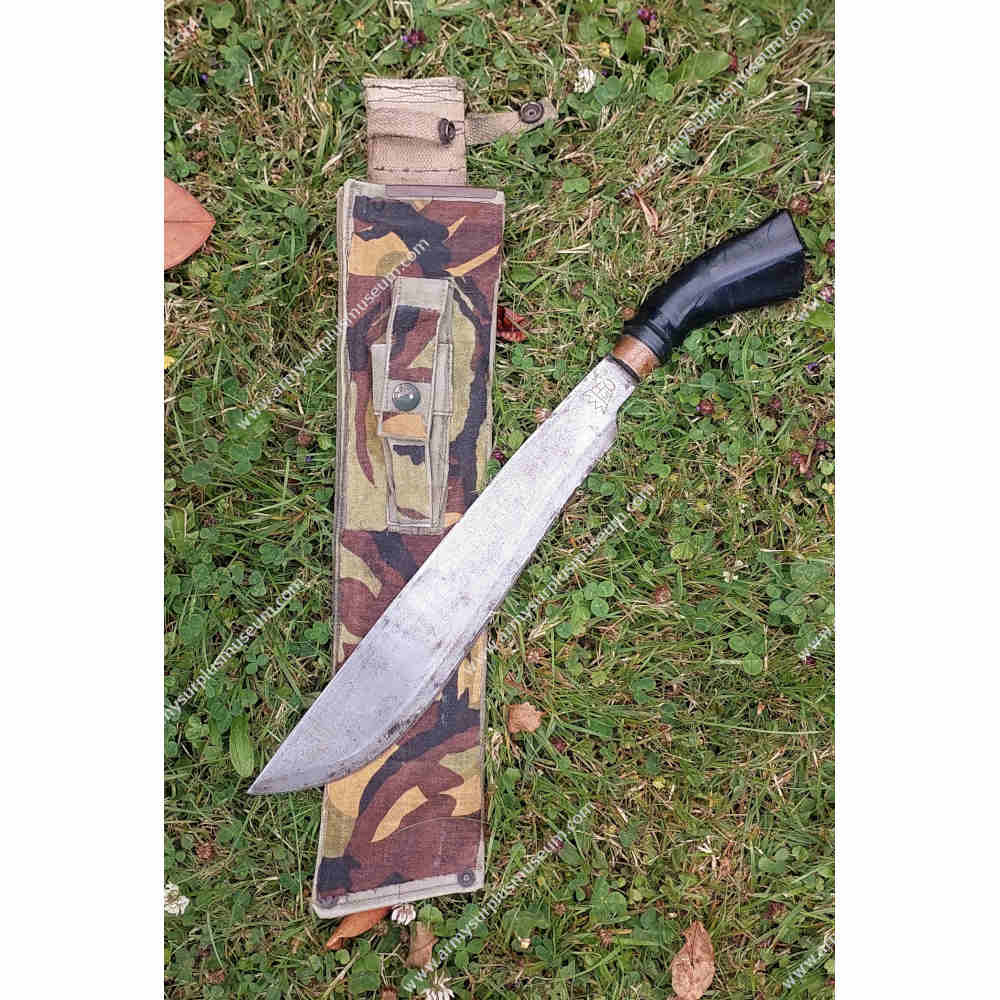
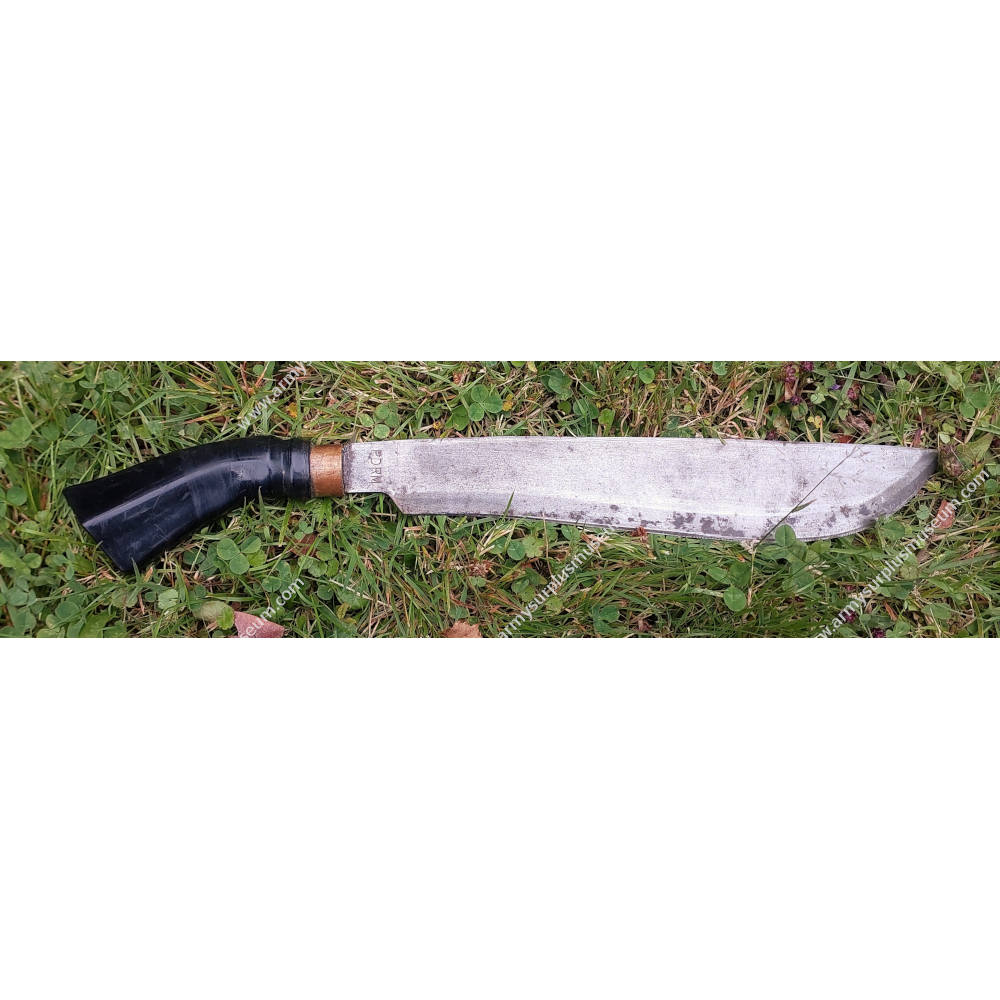
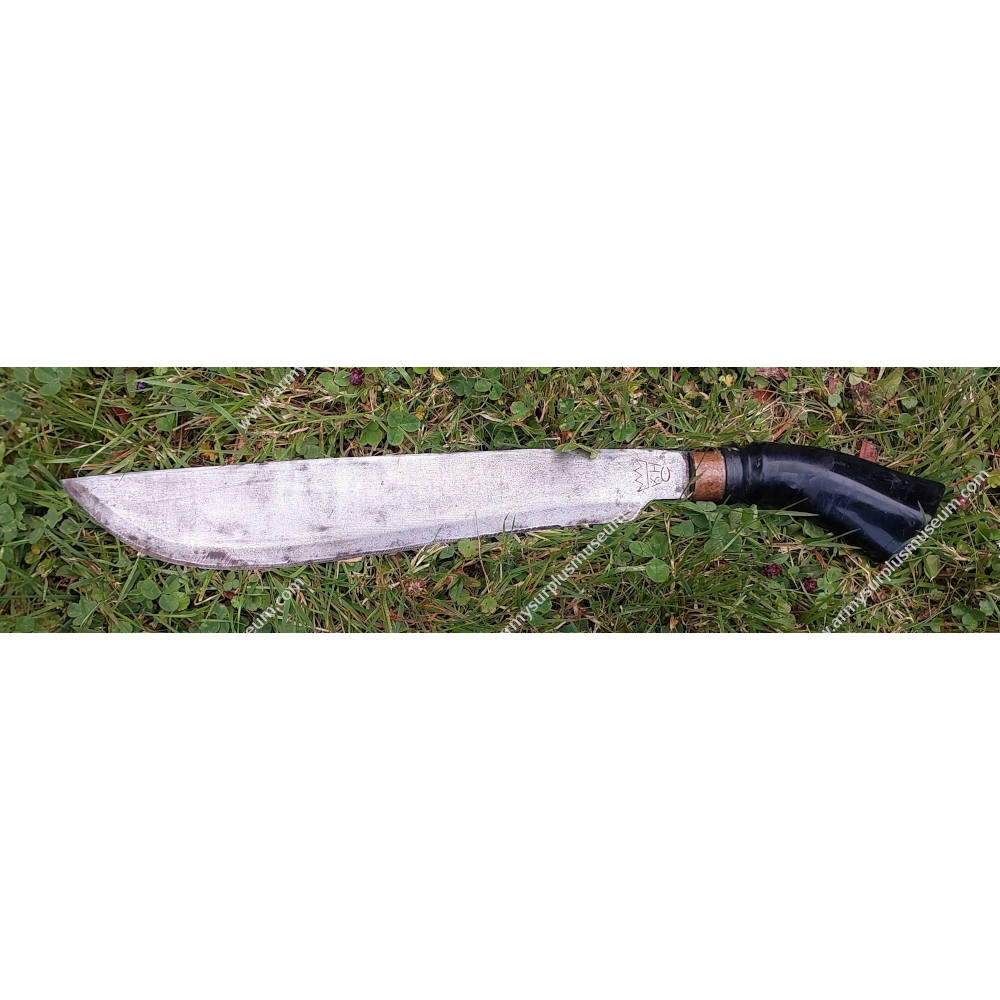
The parang measures approximately 44 cm in overall length, with a 41 cm blade. The blade is approximately 3 cm wide at the base, broadening to around 5 cm toward the forward cutting section before tapering down to the point — a profile typical of jungle working blades designed for powerful chopping.
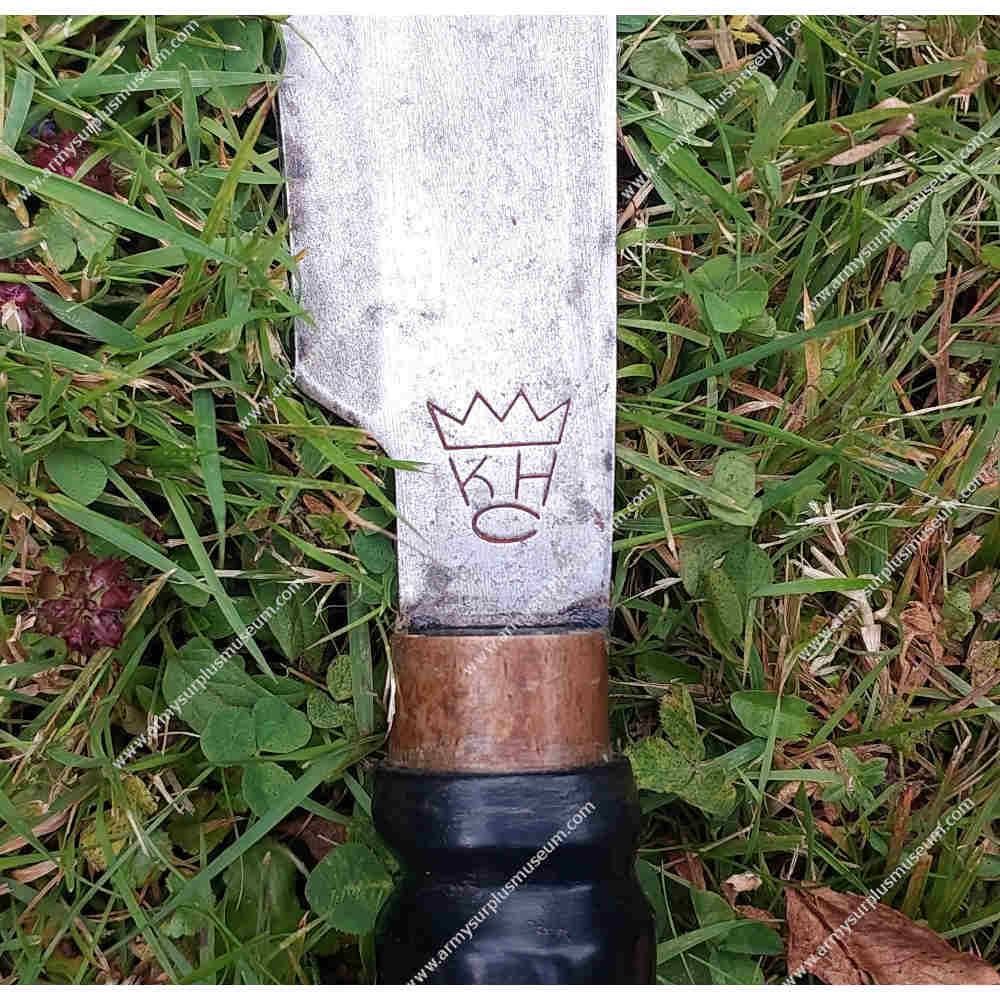
The blade is forged from high-carbon steel and features a full tang extending into the handle. The base of the blade, just above the handle, is stamped PDRM, denoting Royal Malaysian Police issue. The opposing side bears a crowned “KH” maker’s mark, indicating manufacture by a contracted regional forge.
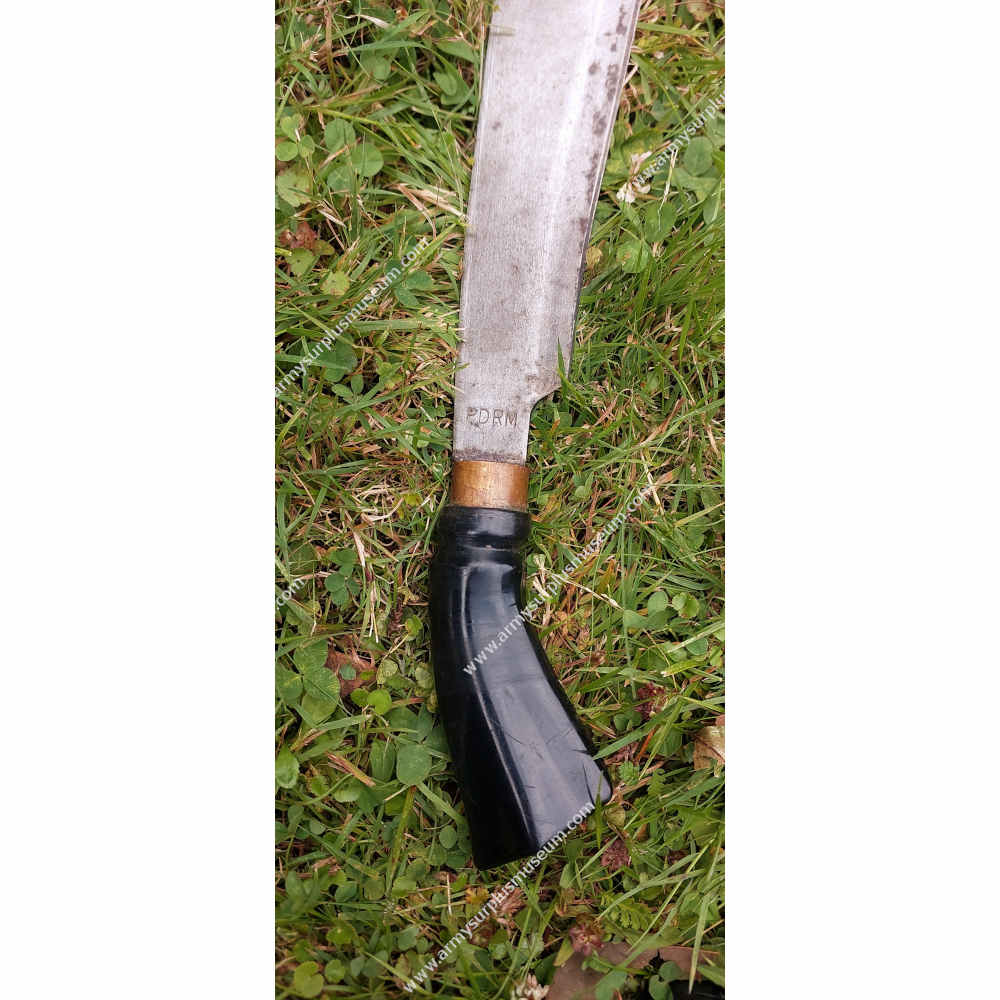
The handle is formed from a Bakelite-type composite material, shaped in a hexagonal profile with rounded edges for grip comfort. It tapers toward the blade and measures approximately 12 cm in length, with a circumference of around 12.5 cm at the base. The tang is secured within the handle by a brass ferrule ring, a common Southeast Asian military construction method intended to improve durability and moisture resistance.
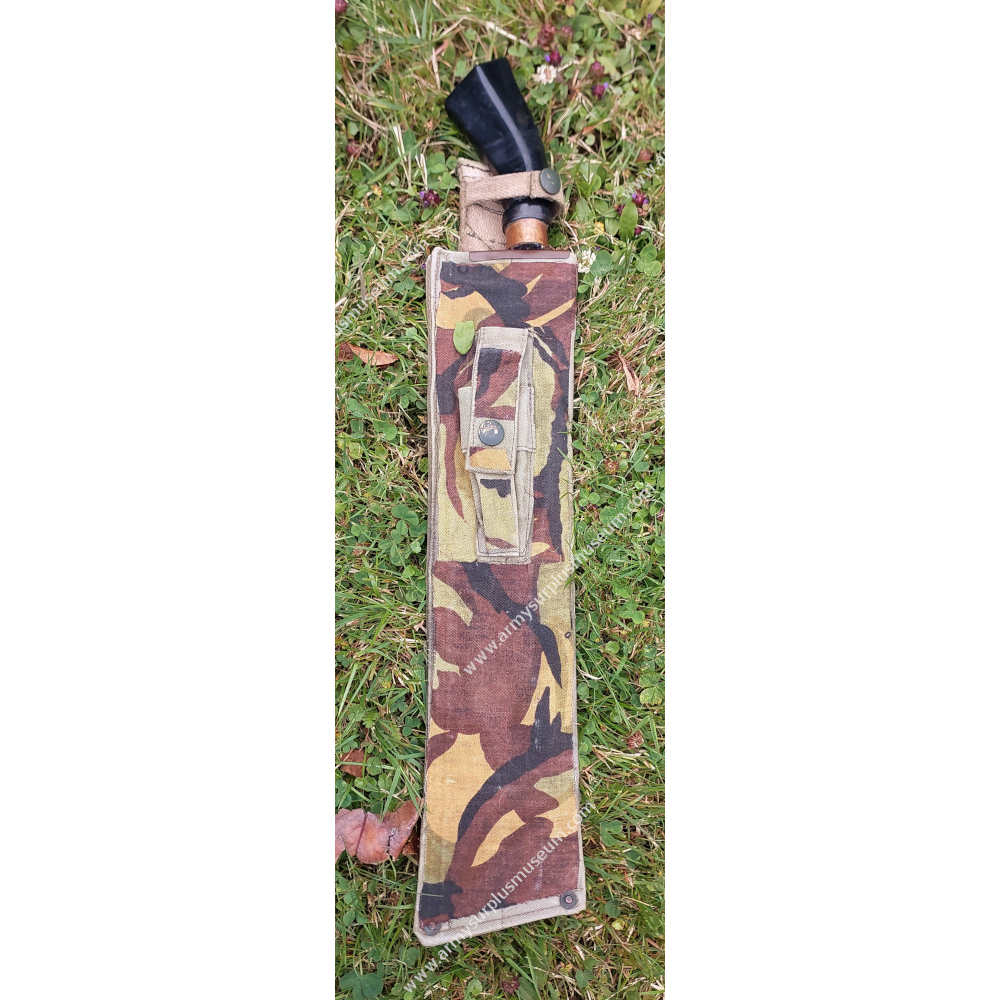
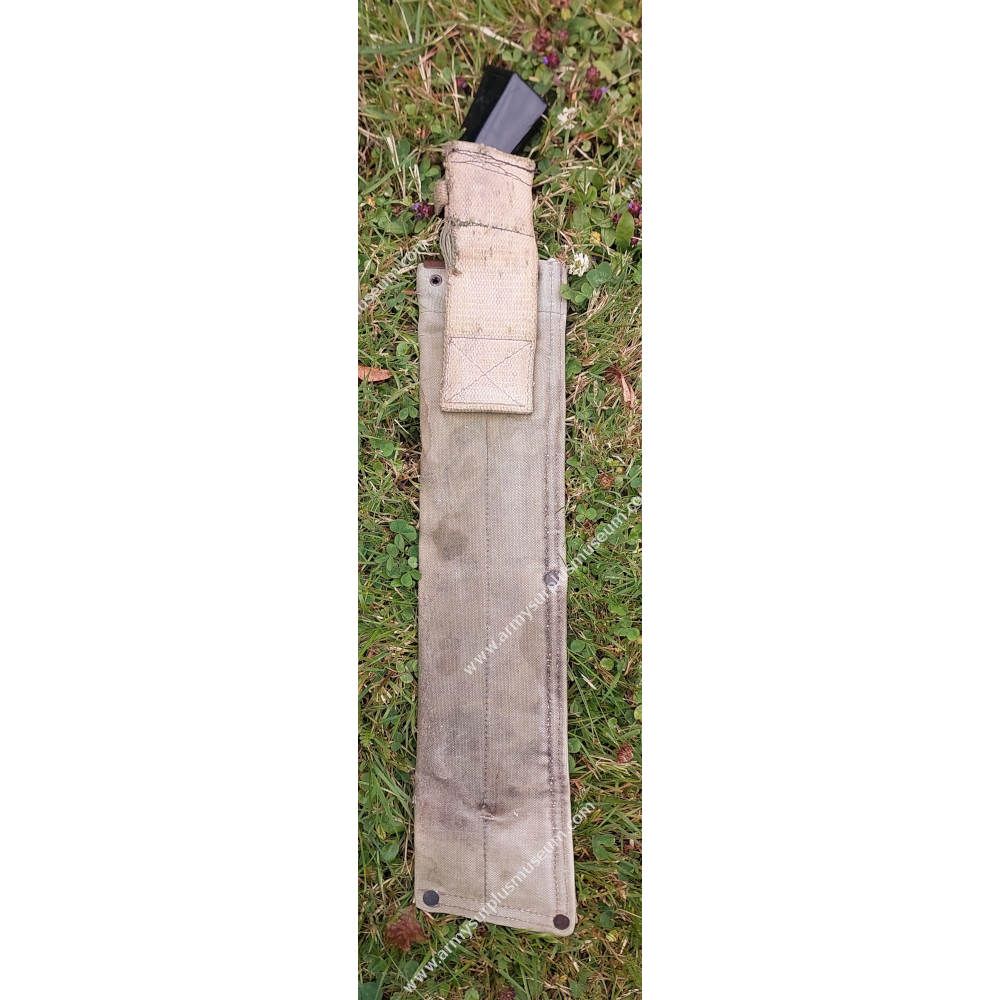
The parang is fitted with an Australian Army golok sheath that has been modified for New Zealand service use. The front face has been covered with New Zealand DPM fabric, glued in place to improve camouflage.
To break up the solid green colour of the sheath and reduce visual contrast in the field, a section of New Zealand DPM camouflage fabric has been glued to the front face.
Additionally, the original M-1956 (Australian) M-1910 wire belt hanger has been removed. The retaining clip and suspension loop have been repositioned lower on the sheath body, allowing the handle to fall in line with the web belt. This deeper carry configuration improves stability during movement, prevents the blade from riding high, and reduces interference with equipment such as the ALICE pack frame.
Examples
Example One
Weight: 671g.
Machete: 465g.
Sheath: 207g.
Object Number: 5836-458-46100.
1 Note 1: This is just a generic name, as we have yet to find its actual name.
